
Every thriving garden starts underground, long before the first leaf ever unfurls. How to Improve Soil Quality Naturally Healthy soil is not just dirt — it’s a living ecosystem teeming with microorganisms, minerals, and organic matter working together to feed your plants. If you’ve ever wondered why some gardens flourish effortlessly while others struggle no matter how much you water or fertilize, the answer almost always lies beneath the surface.
Learning how to improve soil quality naturally is one of the most valuable skills any gardener can develop. Unlike synthetic fertilizers that offer a quick but temporary boost, natural soil-building methods create lasting fertility, better drainage, and a resilient foundation that supports plant life season after season. In this guide, we’ll explore practical, chemical-free strategies to transform tired, depleted soil into a rich, productive growing medium.
Why Soil Health Matters More Than You Think
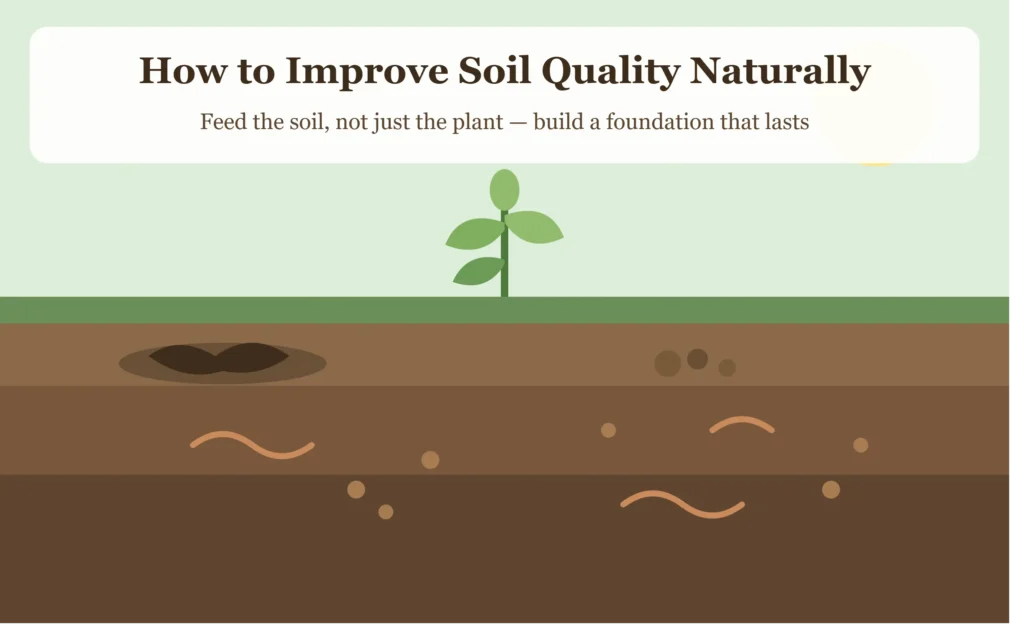
Soil is often treated as a passive backdrop to gardening, but it’s actually an active, dynamic system. A single teaspoon of healthy soil can contain billions of bacteria, fungi, and other microorganisms, all working to break down organic matter, cycle nutrients, and protect plant roots from disease. When soil health declines, plants become more vulnerable to pests, drought stress, and poor yields — no matter how much fertilizer is added on top.
Improving soil quality naturally addresses the root cause rather than masking the symptoms. It restores the biological activity, structure, and nutrient balance that plants depend on, creating a self-sustaining cycle where healthier soil grows healthier plants, which in turn return organic matter to the soil.
Signs Your Soil Needs Improvement
Before diving into solutions, it helps to recognize when soil quality is lacking. Common indicators include:
- Water pooling or draining too fast – a sign of poor structure, either too compacted or too sandy.
- Cracked, hard surface – suggests low organic matter and compaction.
- Stunted or yellowing plants – often points to nutrient deficiencies or poor microbial activity.
- Few earthworms or visible organisms – healthy soil should be alive with activity just below the surface.
- Weak, patchy growth despite regular watering and fertilizing – indicates the soil itself isn’t supporting root development.
If any of these sound familiar, it’s a strong signal that your soil could benefit from natural rehabilitation rather than another round of synthetic feeding.
Add Organic Matter Consistently
The single most effective way to improve soil quality naturally is to consistently add organic matter. Compost, aged manure, leaf mold, and decomposed plant material feed soil microorganisms, which in turn break down nutrients into forms plants can absorb. Organic matter also improves soil structure — helping sandy soils retain moisture and heavy clay soils drain more effectively.
A simple habit of top-dressing garden beds with a layer of compost once or twice a year can dramatically improve fertility over time. Unlike synthetic fertilizers, compost releases nutrients slowly, reducing the risk of nutrient burn while building long-term soil resilience.
Practice Crop Rotation and Cover Cropping
Continuously growing the same plants in the same spot depletes specific nutrients and encourages pest and disease buildup. Rotating crops each season allows the soil to recover and rebalance naturally. Pairing rotation with cover crops — such as clover, rye, or legumes — adds another powerful layer of natural soil improvement.
Cover crops protect bare soil from erosion, suppress weeds, and, in the case of legumes, actually pull nitrogen from the air and store it in the soil through their root systems. When cover crops are cut down and left to decompose, they return organic matter and nutrients directly back into the earth.
Minimize Tilling and Soil Disturbance
Traditional tilling might seem like it’s loosening soil for better growth, but frequent tilling actually destroys soil structure, disrupts beneficial fungal networks, and accelerates the breakdown of organic matter. Reducing tillage — or adopting a no-till approach — allows earthworms, fungi, and microbes to establish stable, long-term networks that naturally aerate and enrich the soil.
Instead of turning the soil over repeatedly, consider using raised beds or simply layering compost and mulch on top, letting natural processes work the material into the ground over time.
Use Mulch to Protect and Feed the Soil
Mulching is one of the simplest and most rewarding natural soil-building techniques. A layer of straw, shredded leaves, wood chips, or grass clippings placed over the soil surface helps regulate temperature, retain moisture, and suppress weeds. As organic mulch breaks down, it slowly feeds the soil below, mimicking the natural leaf-litter cycle found in forests.
Mulching also protects soil from erosion and heavy rain impact, preserving the delicate structure that supports root growth and microbial life.
Encourage Beneficial Microorganisms
Healthy soil depends on a thriving population of beneficial bacteria and fungi, particularly mycorrhizal fungi, which form symbiotic relationships with plant roots to enhance nutrient and water uptake. You can encourage these organisms naturally by:
- Avoiding synthetic pesticides and fungicides, which can kill beneficial microbes along with harmful ones.
- Adding compost teas or worm castings, which introduce diverse microbial populations directly into the soil.
- Keeping soil covered, whether with mulch or living plants, to prevent microbial die-off from sun exposure and temperature swings.
- Rotating and diversifying plantings, which supports a wider range of beneficial organisms rather than favoring a narrow few.
Test and Balance Soil pH Naturally
Even nutrient-rich soil can underperform if its pH is out of balance, since extreme acidity or alkalinity locks nutrients away from plant roots. A simple soil test can reveal whether your soil leans too acidic or too alkaline. Natural amendments like crushed eggshells or wood ash can gently raise pH, while adding compost or elemental sulfur can help lower it, restoring the balance most plants need to access nutrients effectively.
Read This
Best Plants for Small Space Gardening: Grow More With Less Room
Final Thoughts
Improving soil quality naturally is less about quick fixes and more about restoring balance to a living system. By consistently adding organic matter, minimizing disturbance, encouraging beneficial organisms, and protecting the soil surface, you create a self-renewing foundation that supports healthier plants year after year. The results may take a little more patience than synthetic alternatives, but the payoff — richer, more resilient soil — rewards every season that follows.
- Home Organization Ideas for Small Spaces: Declutter and Simplify Your Life
- How to Fix Common Household Problems Yourself: A Practical Homeowner’s Guide
- DIY Projects for Small Apartments: Creative Ways to Maximize Every Inch
- Budget-Friendly Home Improvement Projects That Actually Make a Difference
- How to Upcycle Old Furniture: Give Tired Pieces a Second Life