
Not everyone has a sprawling backyard or a plot of fertile soil waiting to be tilled — and that’s perfectly fine. How to Garden in Containers If you’ve ever wondered how to garden in containers, you’re about to discover one of the most flexible, forgiving, and rewarding ways to grow anything from juicy tomatoes to fragrant herbs, no matter how small your balcony, patio, or windowsill might be. Container gardening has quietly become one of the most popular ways for urban dwellers, renters, and busy homeowners to reconnect with growing their own food and flowers — and once you get the basics right, it’s almost impossible to get bored of it.
This guide walks you through everything you need to know to start strong, avoid common rookie mistakes, and keep your container garden thriving all season long.
Why Container Gardening Is Worth Trying
Before diving into the how-to, it helps to understand why so many people are switching to pots and planters instead of traditional in-ground beds.
Container gardening gives you total control over soil quality, drainage, and sunlight exposure — three things that can make or break a garden. Instead of fighting compacted clay or rocky ground, you build the perfect growing environment right inside the pot. It’s also incredibly mobile: if a plant isn’t getting enough sun in one spot, you simply move it. Renters love it because containers travel with you when you move. And for anyone dealing with pests, weeds, or soil-borne diseases, containers act as a natural barrier of protection.
Choosing the Right Containers
The container itself is more than just a vessel — it directly affects root health, moisture retention, and how often you’ll need to water.
- Terracotta pots breathe well and prevent overwatering, but dry out faster in hot climates.
- Plastic containers retain moisture longer and are lightweight, making them ideal for balconies.
- Fabric grow bags promote excellent root aeration and are great for potatoes, carrots, and other root vegetables.
- Wooden planters offer a natural aesthetic and good insulation but may need a liner to prevent rot.
- Self-watering containers are perfect for beginners or anyone with an unpredictable schedule.
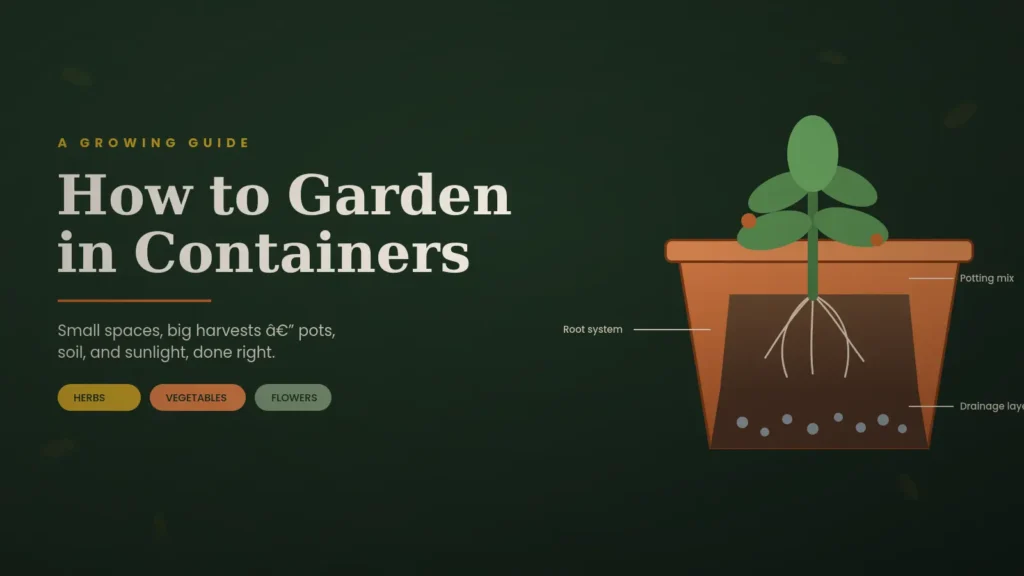
Whatever material you pick, drainage holes are non-negotiable. Without them, water pools at the bottom, suffocating roots and inviting root rot.
Picking the Best Soil Mix
One of the biggest mistakes new container gardeners make is scooping soil straight from the backyard. Garden soil is too dense for pots — it compacts quickly, drains poorly, and often carries pests or weed seeds indoors.
Instead, use a high-quality potting mix formulated specifically for containers. These blends typically include peat moss or coconut coir, perlite or vermiculite for aeration, and just enough compost to feed young plants. If you want an extra boost, mix in a slow-release organic fertilizer at planting time to keep nutrients available for weeks.
Selecting Plants That Thrive in Pots
Almost anything can be grown in a container if the pot is deep and wide enough, but some plants are especially well-suited to this style of gardening:
- Herbs like basil, mint, thyme, and rosemary are compact, low-maintenance, and perfect for kitchen windowsills.
- Leafy greens such as lettuce, spinach, and kale grow quickly and can be harvested multiple times.
- Compact vegetables including cherry tomatoes, peppers, and bush beans do remarkably well in medium to large pots.
- Flowers like petunias, marigolds, and geraniums add color while naturally repelling certain pests.
- Dwarf fruit trees, such as patio citrus or fig varieties, can even be grown in large containers with the right care.
Matching the plant’s mature size to the container’s dimensions is key — a tomato plant crammed into a small pot will always struggle, no matter how much you fertilize it.
Watering and Sunlight: Getting the Balance Right
Because containers hold less soil than the ground, they dry out faster and require more frequent attention. As a general rule, check the top inch of soil daily during warm months — if it feels dry, it’s time to water. Always water deeply until it drains from the bottom, rather than giving light sprinkles that only wet the surface.
Sunlight needs vary by plant, but most vegetables and flowering plants need at least six hours of direct sun daily. Leafy greens and herbs like mint can tolerate partial shade, making them ideal for spots that don’t get full sun exposure.
Feeding Your Container Garden
Because nutrients wash out of pots faster than in-ground soil, container plants need more consistent feeding. A balanced liquid fertilizer applied every two to three weeks during the growing season keeps plants vigorous. Compost tea or worm castings are excellent organic alternatives that improve both nutrition and soil structure over time.
Common Mistakes to Avoid
Even experienced gardeners run into trouble when they overlook the small details that make container gardening successful:
- Using containers without drainage holes
- Overcrowding pots with too many plants
- Letting soil dry out completely between waterings
- Skipping fertilizer because “it’s just a pot”
- Choosing containers too small for a plant’s root system
Avoiding these pitfalls alone will put you ahead of most beginners.
Read This
Companion Planting Guide: Growing a Smarter, More Resilient Garden
Final Thoughts
Learning how to garden in containers opens up a world of growing possibilities, even if all you have is a sunny corner of a balcony. With the right pots, soil, plant choices, and a consistent watering routine, you can enjoy fresh herbs, vibrant flowers, and homegrown vegetables all season long — no backyard required. Start small, observe how your plants respond, and adjust as you go. Before long, your container garden might just become the most rewarding part of your daily routine.
- Home Organization Ideas for Small Spaces: Declutter and Simplify Your Life
- How to Fix Common Household Problems Yourself: A Practical Homeowner’s Guide
- DIY Projects for Small Apartments: Creative Ways to Maximize Every Inch
- Budget-Friendly Home Improvement Projects That Actually Make a Difference
- How to Upcycle Old Furniture: Give Tired Pieces a Second Life